

Flu season is here, and this year every strain in the vaccine has changed. In this post, we’ll cover what’s new in the 2026-2027 flu vaccines, why they’re trivalent, and the key clinical reminders your team should know. We’ll also walk through three operational challenges that trip up practices during peak season, from look-alike packaging to pediatric second doses and temperature excursions, along with practical ways to reduce those risks.
What’s New for 2026-2027
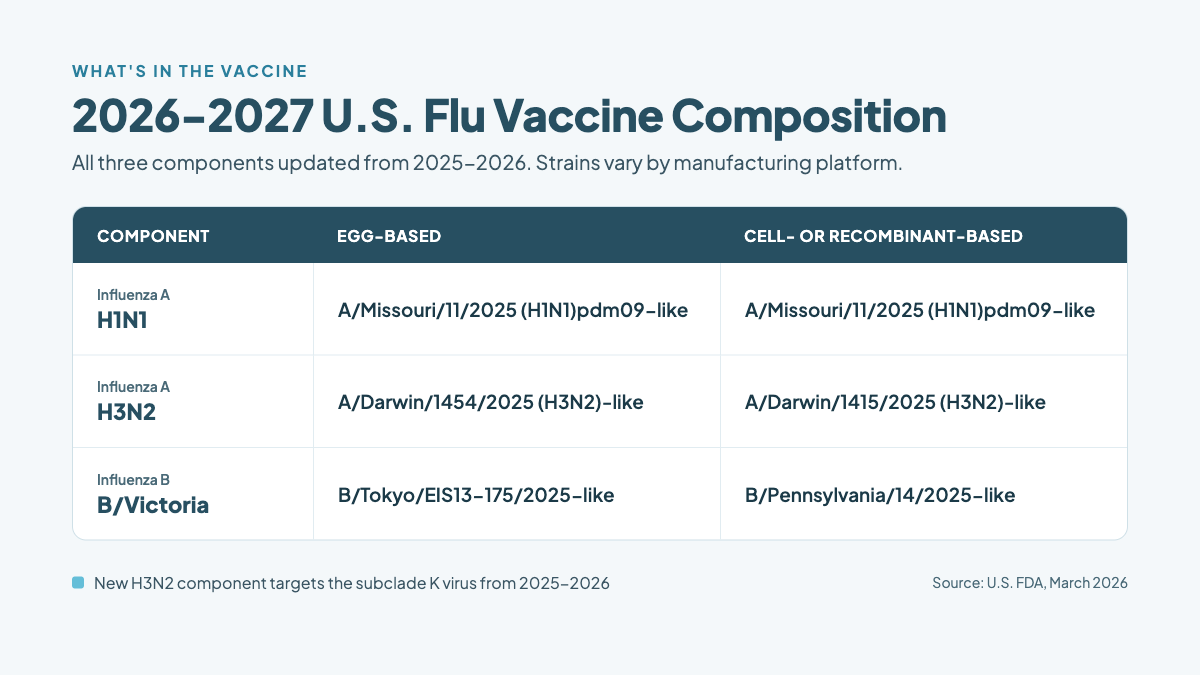
FDA selected the 2026-2027 strains following its advisory committee (VRBPAC) meeting in March 2026. All three components were updated from last season, including a new H3N2 component targeting the subclade K virus that circulated widely during 2025-2026.
Strain selections vary slightly by manufacturing platform:
Clinical reminder: CDC recommends annual flu vaccination for everyone aged 6 months and older without contraindications. For adults 65 and older, high-dose, recombinant or adjuvanted vaccines are preferred. Always refer to CDC’s current Interim Clinical Considerations for full guidance.
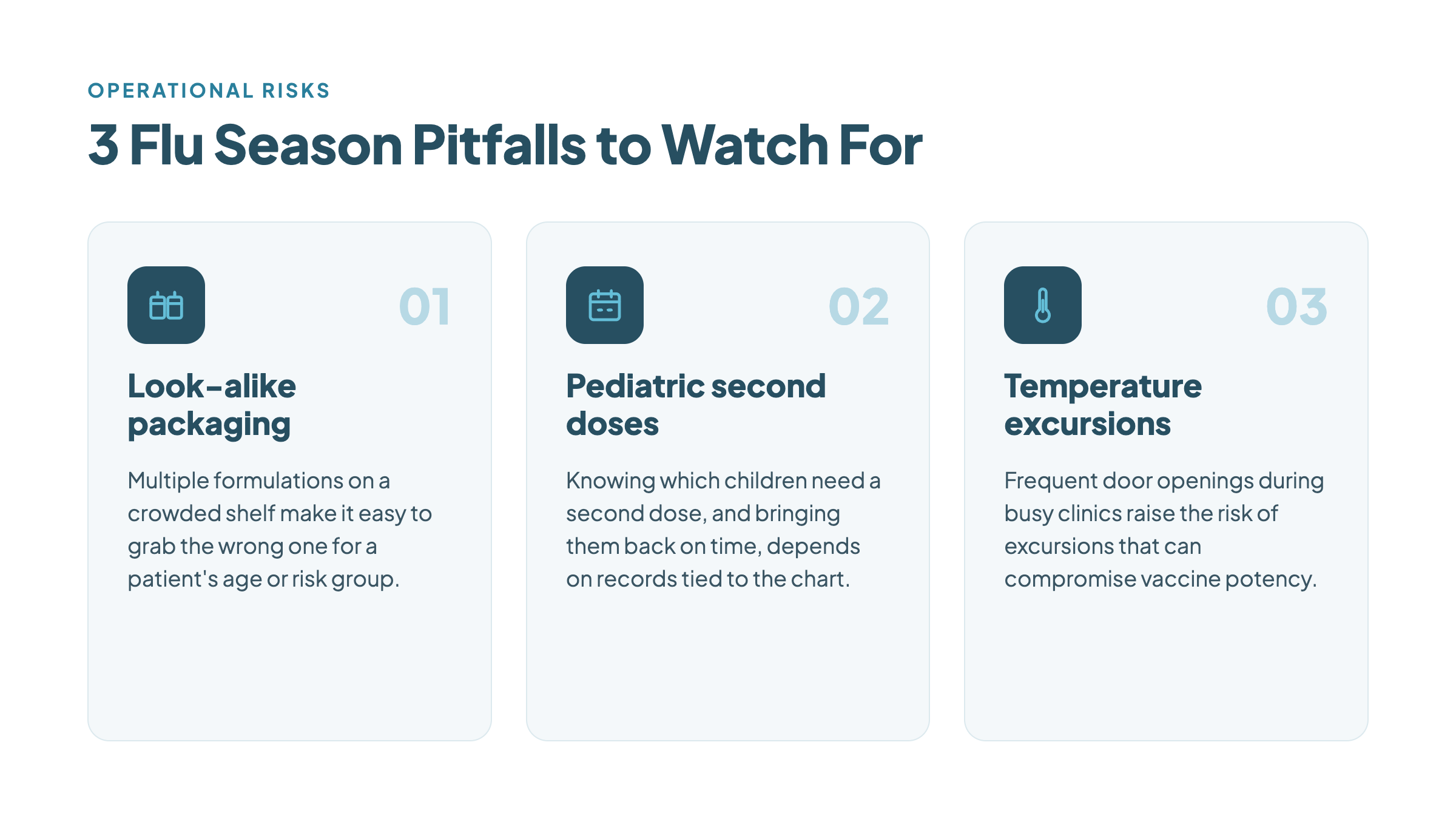
3 Operational Challenges Clinics Face Each Flu Season
1. Look-Alike Packaging Across Formulations
Many practices stock several formulations at once, such as standard-dose egg-based, cell-based, recombinant, high-dose and adjuvanted vaccines, sometimes alongside leftover prior-season stock. The packaging can look very similar on a crowded refrigerator shelf.
The risk: During a busy morning, staff may select the wrong formulation for a patient’s age or risk group, or pull a dose that should have been removed from inventory.
2. Pediatric Two-Dose Tracking
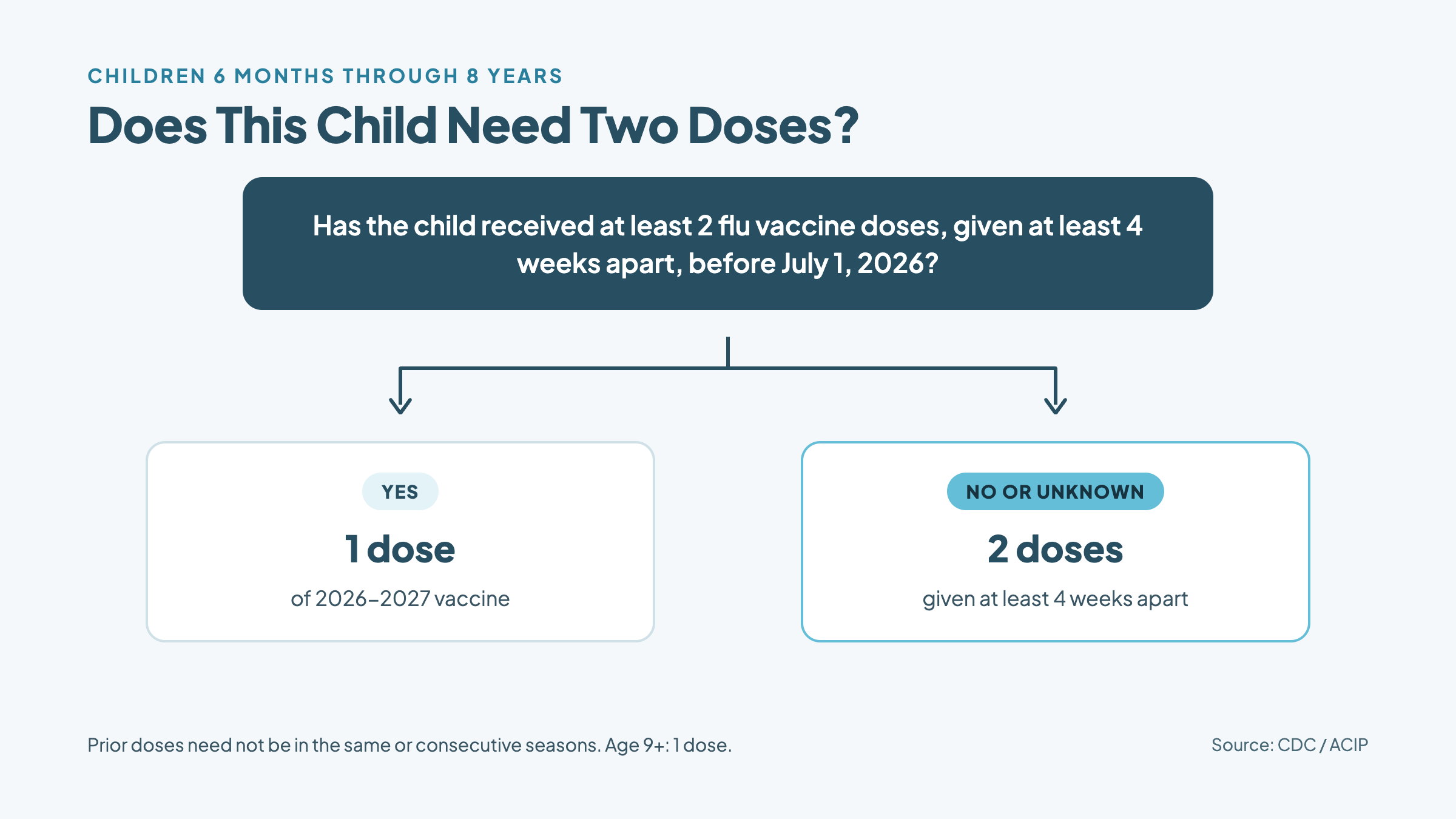
Children aged 6 months through 8 years need two doses, given at least 4 weeks apart, unless they previously received at least two flu vaccine doses (given at least 4 weeks apart) before July 1 of the current season.
The risk: Identifying which children need a second dose, and bringing them back at the right interval, depends on inventory records that connect reliably to the patient’s chart.
3. Temperature Excursions During High-Volume Clinics
During flu clinics, storage units may be opened many times per hour. Frequent door openings increase the risk of temperature excursions that can compromise vaccine potency.
The risk: An undetected excursion can mean lost doses, revaccination and a difficult conversation with patients.
How TruMed Helps Reduce Flu Season Risk
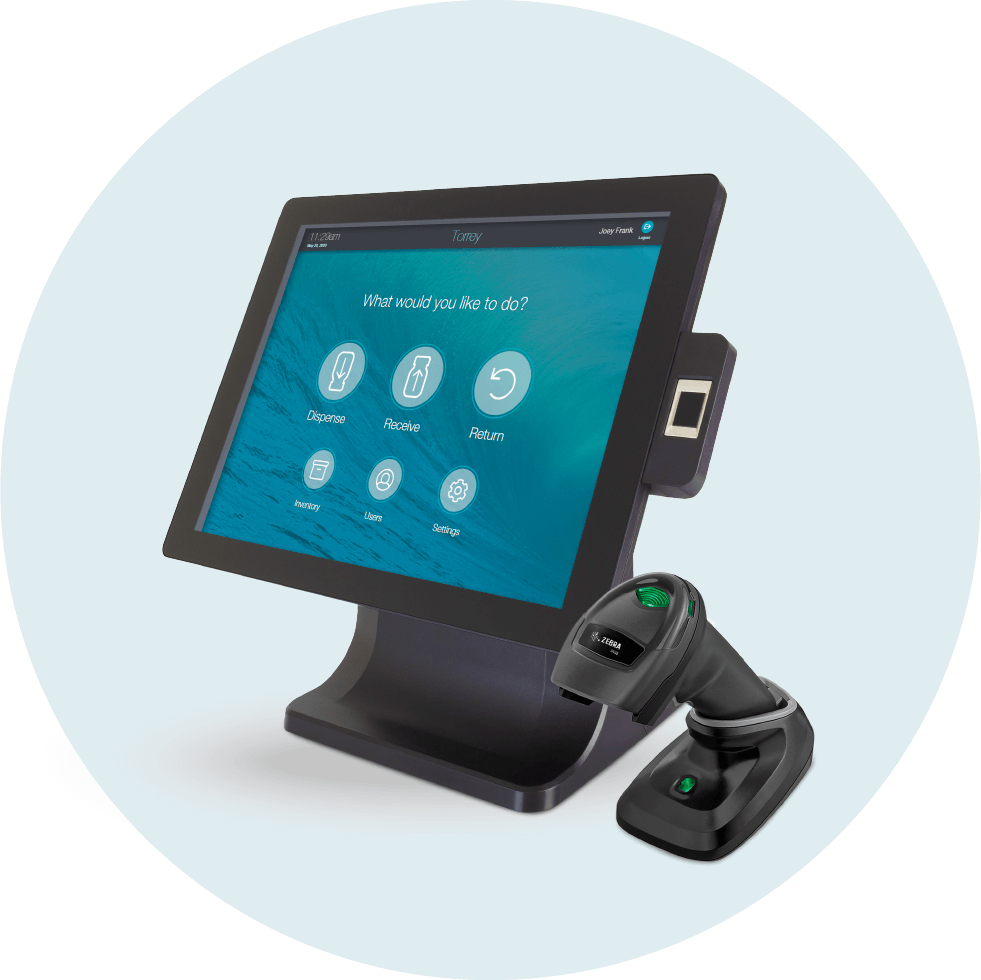
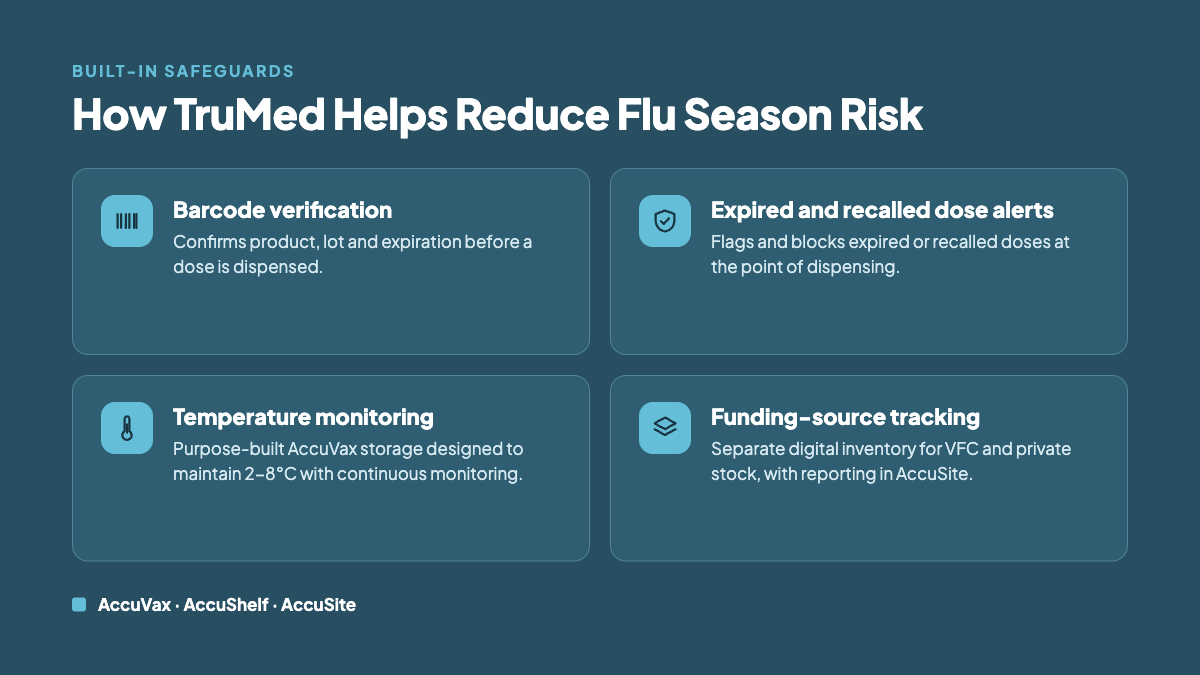
Manual visual checks and paper logs are hard to sustain during peak season. TruMed’s automated vaccine storage and inventory management solutions are designed to reduce human error and simplify compliance:
- Formulation verification: Barcode scanning confirms lot, expiration date and product before a dose is dispensed, so staff aren’t relying on reading box labels on a crowded shelf.
- Expired and recalled doses: The system flags and blocks expired or recalled doses at the point of dispensing, helping keep them out of patient care.
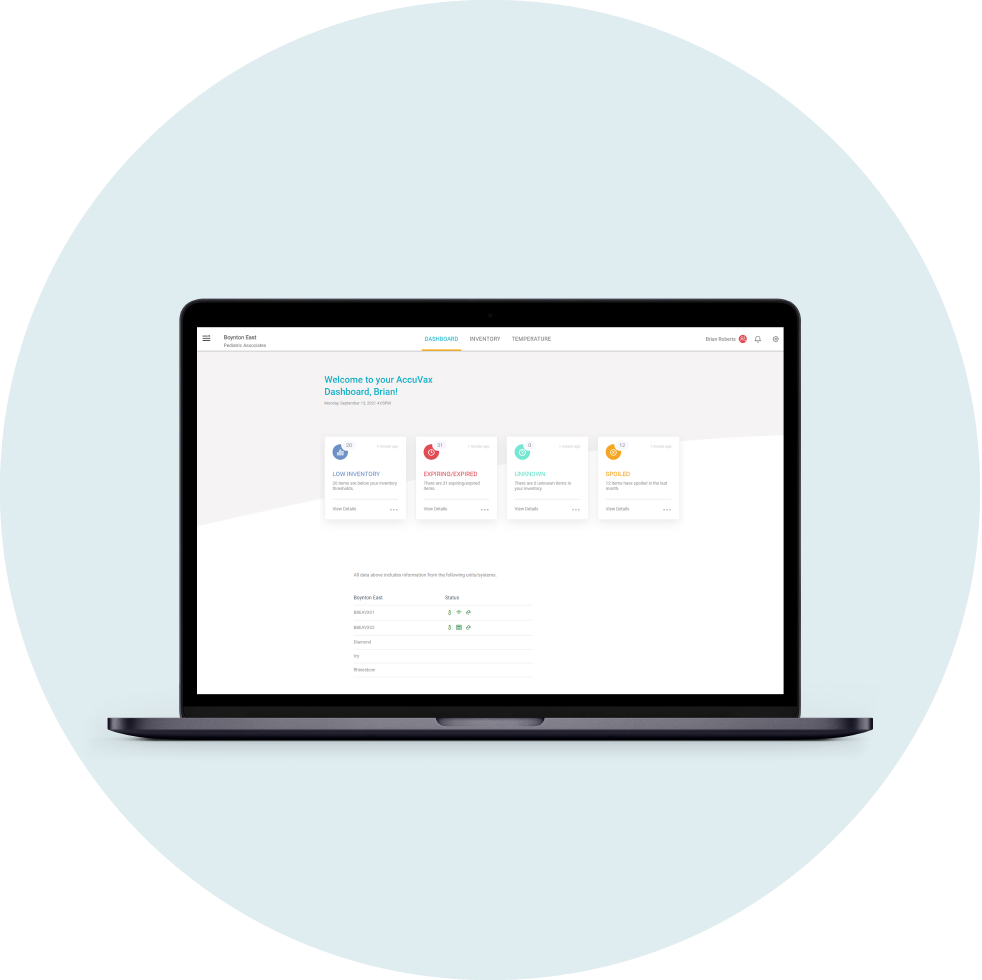
- Temperature control: AccuVax is a purpose-built vaccine storage system designed to maintain 2-8°C with continuous monitoring, reducing the risk of excursions from frequent door openings.
- VFC and private stock: Separate digital inventory tracking by funding source, with reporting through AccuSite, helps reduce the burden of manual separation and reconciliation.
Prepare Your Practice for the 2026-2027 Season
A season with fully updated vaccine strains is a good time to review how your team stores, selects and documents every dose. Automated safeguards help your staff spend less time on manual checks and more time on patient care, while supporting audit readiness.
Contact TruMed today to see how AccuVax, AccuShelf and AccuSite can simplify your flu season inventory management.
This article is for informational purposes only. Always refer to the full FDA prescribing information for mFlusiva and current CDC guidance.